The Ferry Landing: Maps, Images
Parkhurst Whitney, owner of the Cataract House hotel, developed extensive tourist attractions in Niagara Falls. In 1818, he completed a stairway down from the top of the Niagara Gorge at Prospect Point to a ferry landing on the riverfront below. By 1820, people could take ferry rowboats across the river to a landing at the foot of the steep hill below the famous Clifton House hotel in Niagara Falls, Canada. Designed originally for tourists, this ferry brought increased business to the American side of the Falls.
By the 1830s, waiters from the Cataract House began to row freedom seekers trying to escape to Canada along this same route. In 1846, a steam ferry called the Maid of the Mist began operations, but it did not replace the ferry rowboats. In 1848, a bridge across the Niagara River two miles north of the Cataract House offered another way for travelers to go between the U.S. and Canada. The Maid of the Mist began to focus on sight-seeing trips to the Canadian Falls, just as it does today, rather than on ferrying people across the river. But waiters at the Cataract House, including head waiter John W. Morrison, continued to row “star-led fugitives,” as one account called them in 1843, from the docks at the foot of Prospect Point across the river to freedom in Canada.[1]
[1] “Star-led fugitives,” noted in “Report of the Canada Mission Committee,” The Liberator, March 17, 1843.
Ferry Image 1.
G.W. Johnson’s map of Prospect Point, the area overlooking Niagara Falls, shows the ferry and Ferry House (No. 13).
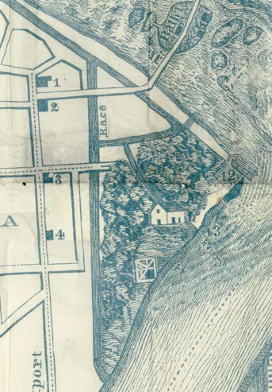

G.W. Johnson, “A Map of the Niagara River,” 1849-50.
Ferry Images 2.
The staircase that led from Prospect Point at the top of the gorge to the ferry landing at the bottom was built in 1818. Parkhurst Whitney assured guests at the Cataract House in 1821 that the stairs were “in good repair and the passage of the river is perfectly safe.”
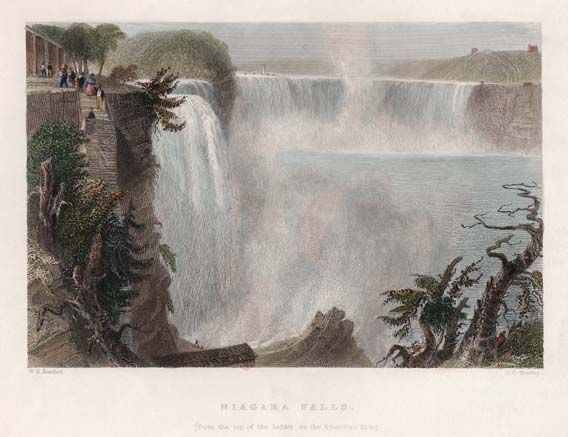
William Bartlett, “Niagara Falls (from the top of the ladder, on the American side), J.C. Bentley, 1839.
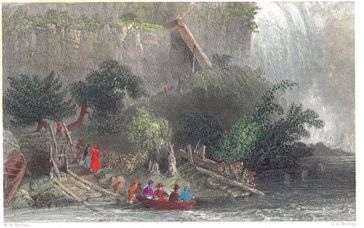
William Bartlett, “The Landing on the American Side (Falls of Niagara).”
in Nathaniel Parker Willis. American Scenery, Vol. I (of 2) (1839), engraving by J.S. Bentley.
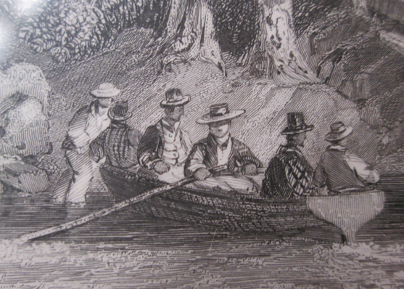
Closeup of William Bartlett, “The Landing on the American Side (Falls of Niagara).”
in Nathaniel Parker Willis. American Scenery, Vol. I (of 2) (1839), engraving by J.S. Bentley.
Ferry Image 3.
After 1846, the steamboat Maid of the Mist also docked here. A “funicular railway” took people and baggage up and down the bank. A funicular railway employs a cable system to carry passenger cars up and down a steep slope. You can take a modern version of this railway, called the Falls Incline Railway, in Niagara Falls, Ontario (https://www.niagaraparks.com/visit/attractions/falls-incline-railway/).
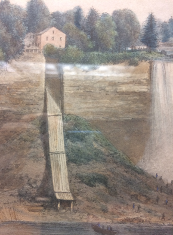
Boussod, Valadon, and Cie. Courtesy Wax Museum, Niagara Falls, New York
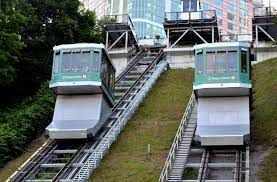
Incline Railway
Ferry Image 4.
Here is a drawing of the ferry in 1853, the year that Martha and her husband escaped and Patrick Sneed almost escaped.
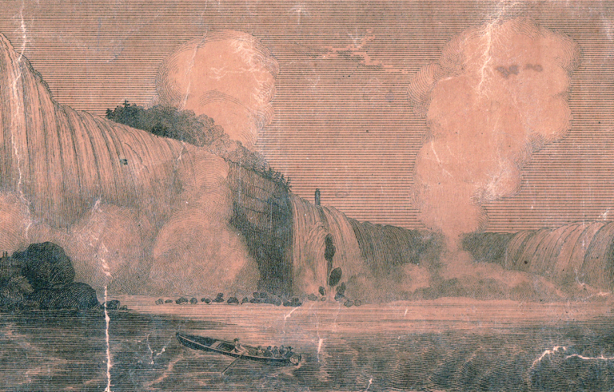
“View from the Ferry,” Samuel Geil, Niagara Falls and Vicinity (Philadelphia, 1853).
Ferry Image 5. Here is the story of a young man who escaped on the ferry in 1854, closely pursued by his enslaver. Note that he and his enslaver both traveled on the same train in order to reach Niagara Falls. The railroad depot was just across the road from the Cataract House.
“Close Work.—The Niagara Falls Iris, of yesterday, says that a slave escaping from servitude arrived in that village, on Tuesday evening, and reached the ferry just in time to get into the little boat as it was preparing to start for the Canada side. His master was on the same train in pursuit, and reached the ferry only in time to see his chattel midway across the foaming waters of Niagara. We learn that the slave was last seen by his master at Cleveland; yet, although both were on the same trains, the slave succeeded in eluding his vigilance, and placing himself beyond pursuit.” Liberator, August 18, 1854.
Ferry Image 5. The original Maid of the Mist, 1846, was a steamboat with two smokestacks. After the Suspension Bridge opened, first for carriage and foot traffic in 1848 and then for rail traffic in 1855, the Maid of the Mist became less a ferry service than a tourist attraction. Much as it does today, it took visitors close to the base of the Canadian Falls.
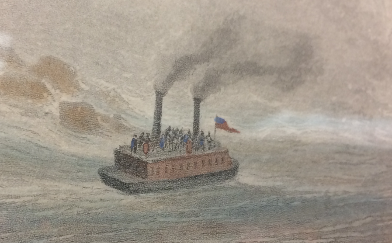
Boussod Valadon & Cie, Imprimeurs, Paris.
Courtesy Wax Museum, Niagara Falls, New York
Ferry Image 6. Here is a photograph, probably taken in the late nineteenth century, of the Maid of the Mist near the ferry landing at the base of the Falls.
Boussod Valadon & Cie, Imprimeurs, Paris [reprint after 1878]
Courtesy Wax Museum, Niagara Falls, New York
Ferry Image 6.
Here is a photograph, probably taken in the late nineteenth century, of the Maid of the Mist near the ferry landing at the base of the Falls.
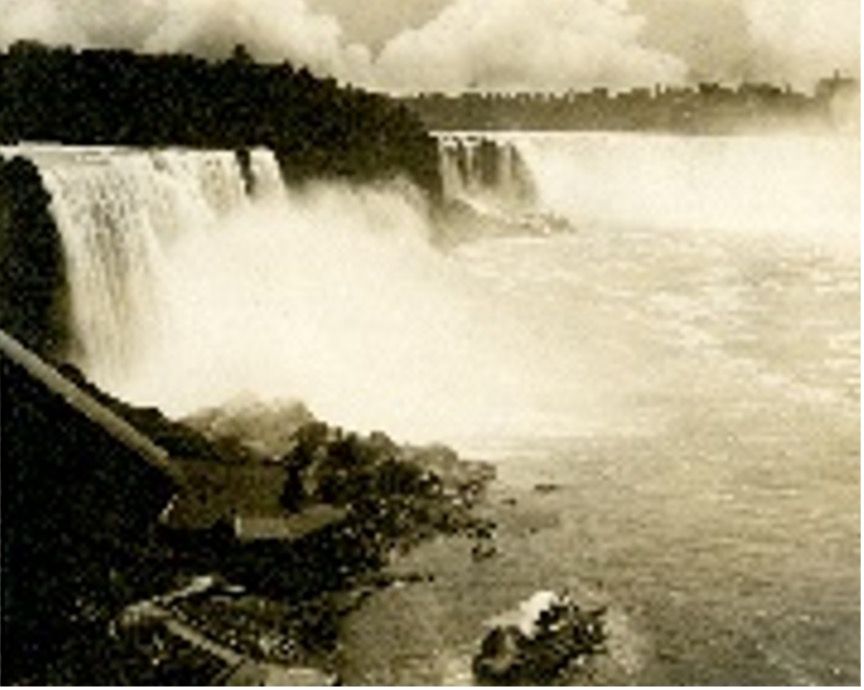
Maid of the Mist at the ferry landing below the Falls, n.d.
Courtesy Niagara Falls Public Library
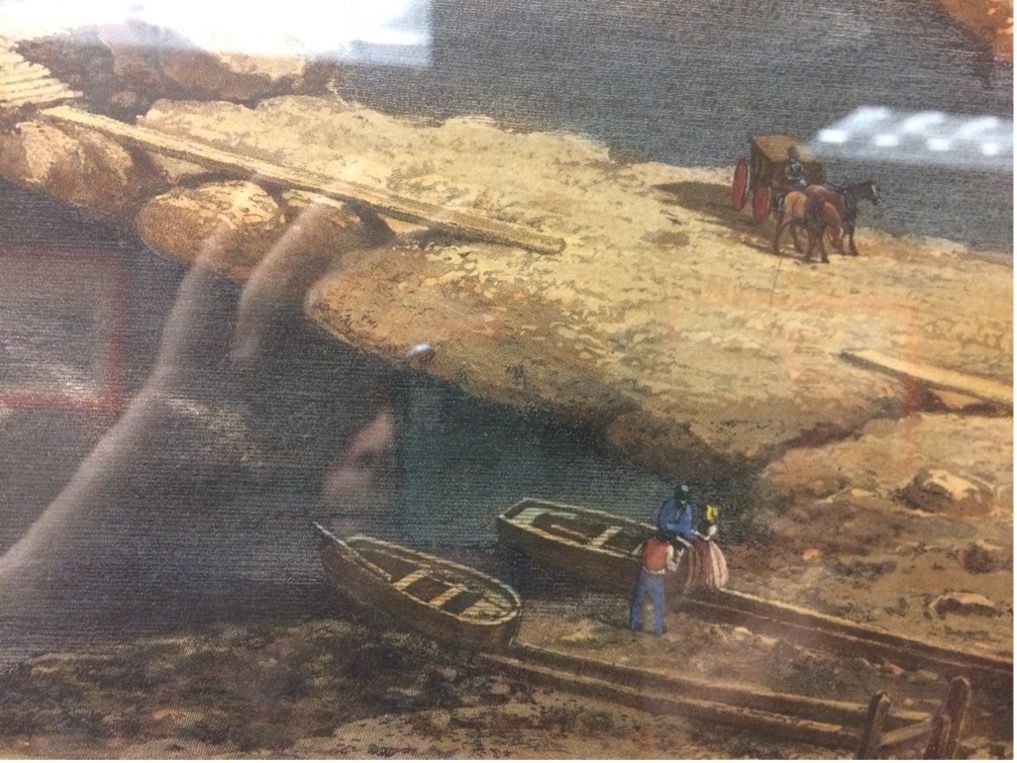
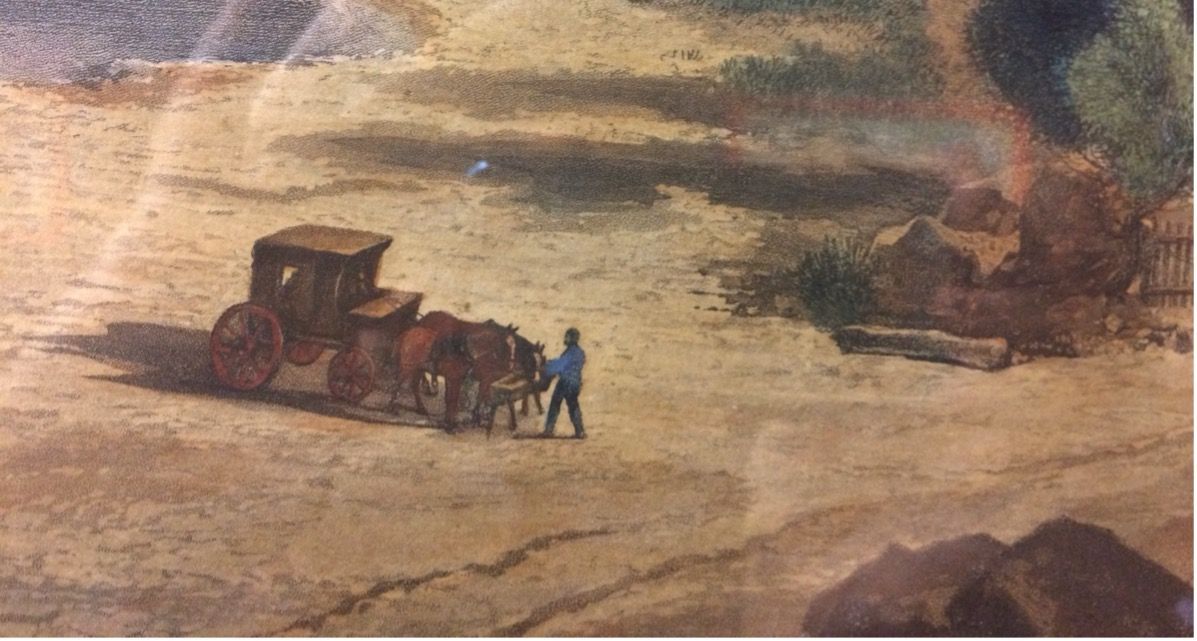
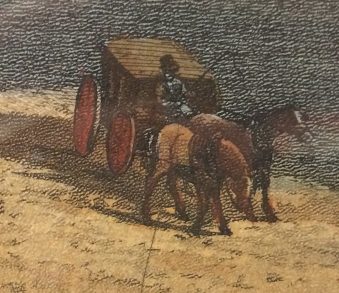
Ferry Image 6. By the 1850s, this ferry landing at the base of the Niagara Gorge had become known in Europe as a major Underground Railroad escape point. These Black carriage drivers and ferry men waited for visitors on the riverbank on the Canadian side of the river, at the base of the hill leading up to the Clifton House hotel.
Boussod Valadon & Cie, Imprimeurs, Paris.
Courtesy Wax Museum, Niagara Falls, New York
Boussod Valadon & Cie, Imprimeurs, Paris.
Courtesy Wax Museum, Niagara Falls, New York
Boussod Valadon & Cie, Imprimeurs, Paris.
Courtesy Wax Museum, Niagara Falls, New York
Ferry Image 7
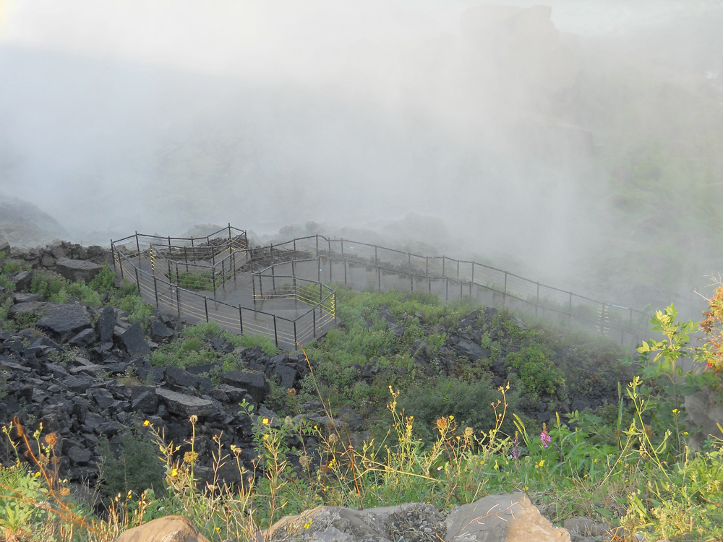
Movie by Judith Wellman, July 2022
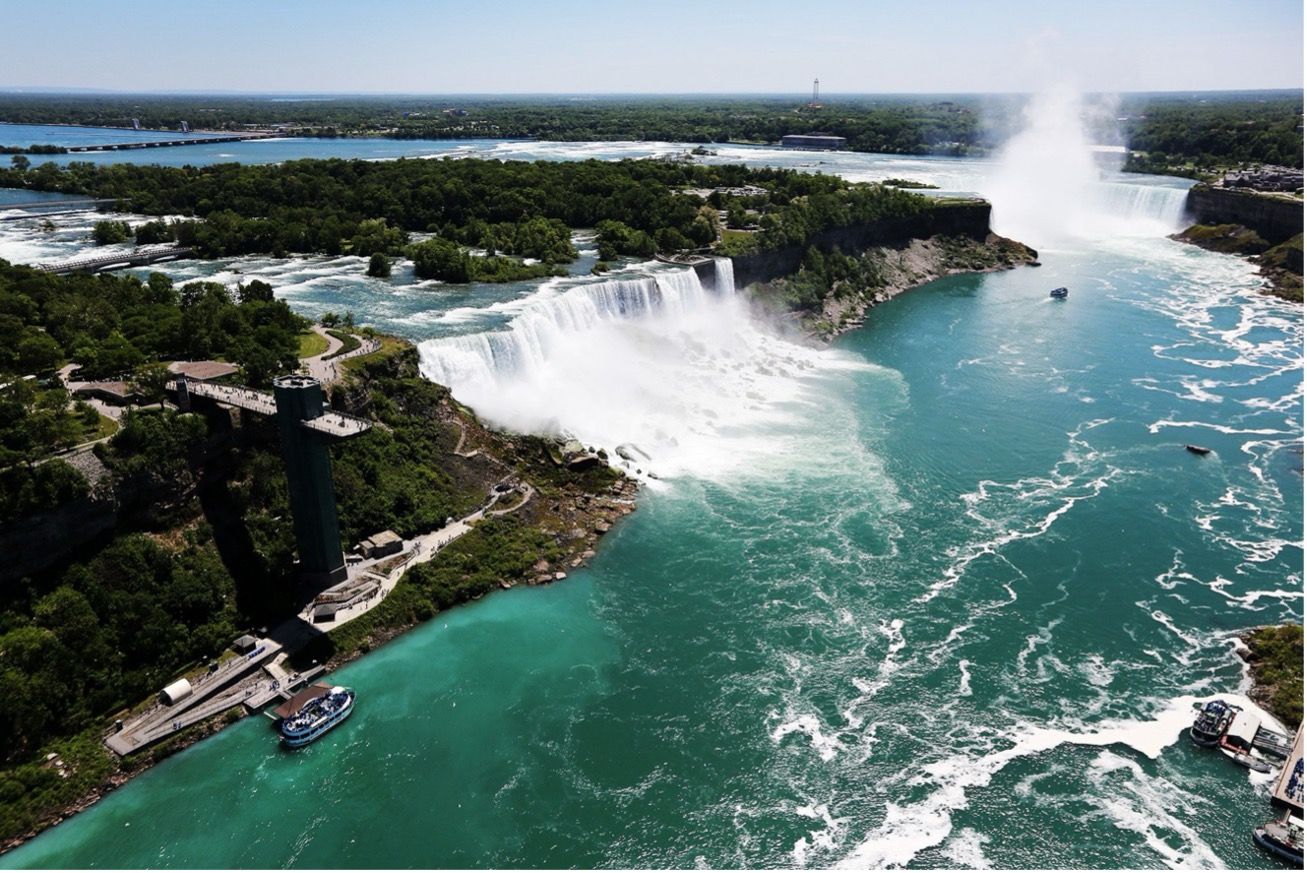

Ferry Videos
Movies by Judith Wellman, July 2022