Maryland:
Map, Image, Document
Overview
Freedom seekers came through Niagara Falls from the Southern states, both those along the East coast and those west of the Appalachian Mountains. Most of the people associated with the Cataract House whose names we know came from the Upper South (Kentucky or Tennessee in the West and Maryland, Virginia, Delaware, and Washington, D.C. in the East). At least one (Patrick Sneed) came from Georgia and the unnamed nursemaid of the Evans family was from Louisiana.
Many people of African descent who worked at the Cataract House also listed their birthplace in US census documents as a Southern state (or simply as “unknown”). Those who did so likely had escaped from slavery and were trying to conceal their origins in case of pursuit. In 1850, for example, of the twenty-eight people of color who lived at the Cataract House, twenty-one listed their birthplace as a Southern state (nine in Maryland, six in Virginia, three from the District of Columbia, and there were three with no birthplace listed).
The documents here suggest how some of the freedom seekers who came from Maryland may have learned about the Underground Railroad and the secret routes they used to escape from slavery. We know from John Morrison, head waiter, that at least some people who came to Niagara Falls were sent through the home of Joseph Smith, his wife Tacy Shoemaker Smith, and their daughter Rachel Smith in southeastern Pennsylvania.
Map:
This map from the National Geographic magazine shows major Underground Railroad routes from the United States to Canada and Mexico. Two more major routes came through the Finger Lakes region of central New York and along the shore of Lake Erie.
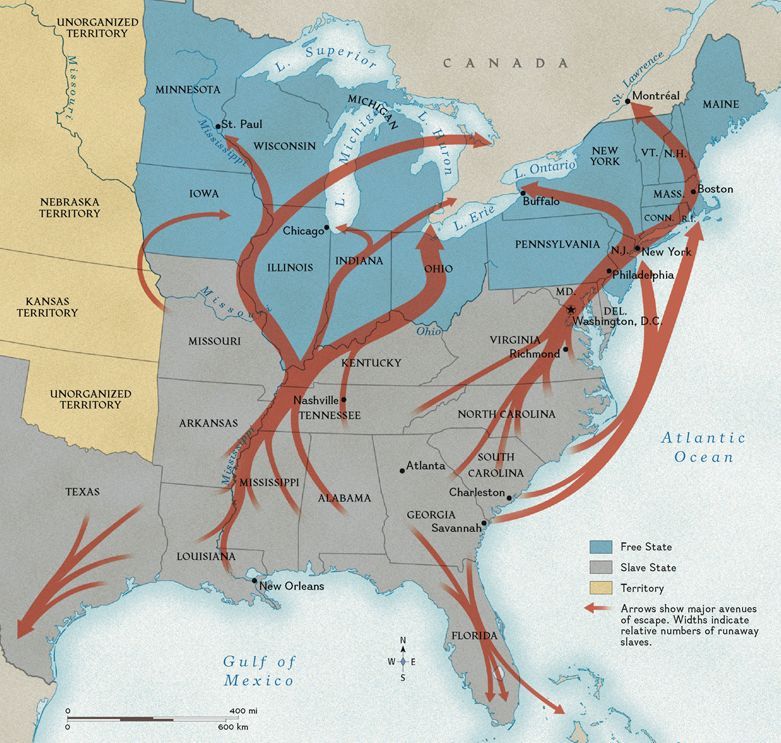
Map of major Underground Railroad routes, National Geographic,
online at Niagara Falls Underground Railroad Heritage Center: https://education.nationalgeographic.org/resource/undergroundrailroad/.
Image:
Home of Joseph Smith, his wife Tacy Shoemaker Smith, and daughter Rachel Smith, Drumore Township, Lancaster County, Pennsylvania. Joseph Smith (1801-1878) was a member of the Society of Friends (the Quakers). He lived in Lancaster County, in southeastern Pennsylvania. Local tradition suggests that the Smith family sheltered people escaping from slavery in the basement of this barn.

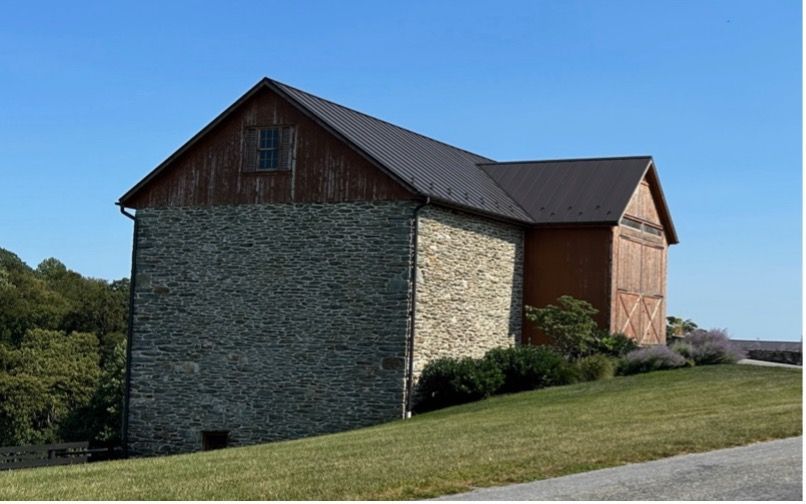
Smith barn
Judith Wellman, August 2023
Document 1:
In 1883, local historian Robert Smedley described people who traveled on the Underground Railroad in southeastern Pennsylvania to find the farm of Joseph Smith, Tacy Shoemaker Smith, and their daughter Rachel Smith.
JOSEPH SMITH Born Fourth Month 15th 1801 Died Seventh Month 19th 1878.
Among the first fugitives that came to Joseph Smith’s Drumore township Lancaster county was one from Maryland in June 1844. It was early in the morning. The man was without hat or shoes. His appearance suggested that something was wrong. Joseph’s antislavery principles were known and as the men whom he had working for him were then at breakfast and were opposed to interfering with slavery although they were members of the Society of Friends he ordered the man to be kept out of sight until he could have the opportunity to question him. The fugitive stated where he was from and using his expression said his master was h l. [KS1] He was fed and concealed during the day and at night was sent in care of one of Joseph’s colored men [KS2] to Thomas Whitson who sent him on the following night to Lindley Coates from there he was safely sent from friend to friend until he reached Canada.
After this many came and were forwarded to other agents and his house became widely known as one of the important stations on this long line of nightly travel with its many branches like arms of beneficence extended to the hunted slave to aid him on his way from a land of bondage to seek freedom within the American domain of England’s Queen. The largest number that came at one time was thirteen all from Virginia. On being asked where they first heard of Joseph Smith they replied, “Down where we come from They don’t like you down there. They call you an abolitionist.”
“And was that the reason you tried to get here?”
“Yes sir it was. We know’d you’d help us on to Canada where we’d be free.”
They were asked how long they were planning their escape and said several weeks and we’ve been just three weeks getting here. We were afraid of being caught and taken back and every little noise scared us. But we were determined to be free. We traveled only at night and in day time we lay in swamps where the thickets were almost as dark as night itself. There were plenty of them in Virginia but we didn’t find any in Maryland. Sometimes we were two or three days without anything to eat. One of this number was a lad of fourteen . . . .
The last slaves who came to Joseph Smith’s were a woman and her two children. Her master had once been in affluent circumstances but was now very much reduced in his possessions. His next move to raise funds was to sell this woman and her children. His son a young man of tender feelings for others felt it an act of cruelty to sell her and her children who were entwined within her affections and thus to thrust them out upon the uncertainty of having a good or a bad master told her of the decision of his father and advised her to go away. He and his wife were acquainted with Joseph Smith and family and had visited them and others in the neighborhood. He directed them there saying that he would be chosen to go on the hunt of them and he would be sure not to go to that place.
Robert Smedley, (History of the Underground Railroad in Chester and the
Neighboring Counties of Pennsylvania (1883), 227-29 and 231).
Document 2:
Robert Smedley also described how enslaved people found out about Joseph Smith’s house.
Many of the farmers in Drumore township went to Baltimore market with loads of produce taking with them their colored drivers. The slaves sought opportunity to talk with these teamsters [cart and wagon drivers] and to ask them many questions as to where they came from whom they lived with and what kind of work they did how they were treated etc etc. These colored teamsters gave them all the information they could which was liberally conveyed to others and especially to the slaves who accompanied their masters from the planting states to Baltimore on business.[1] These would tell it to other slaves on their return South and say if they could only get to Joseph Smith’s in Pennsylvania he would help them on to a land of freedom. This stimulated their inborn love of liberty to devising plans by which to reach Smith’s and from there be assisted to where no task master should exact from their weary limbs the daily requirements of uncompensated toil. And so successful was the management of this station that all who reached it were passed on safely toward the goal of their desires.
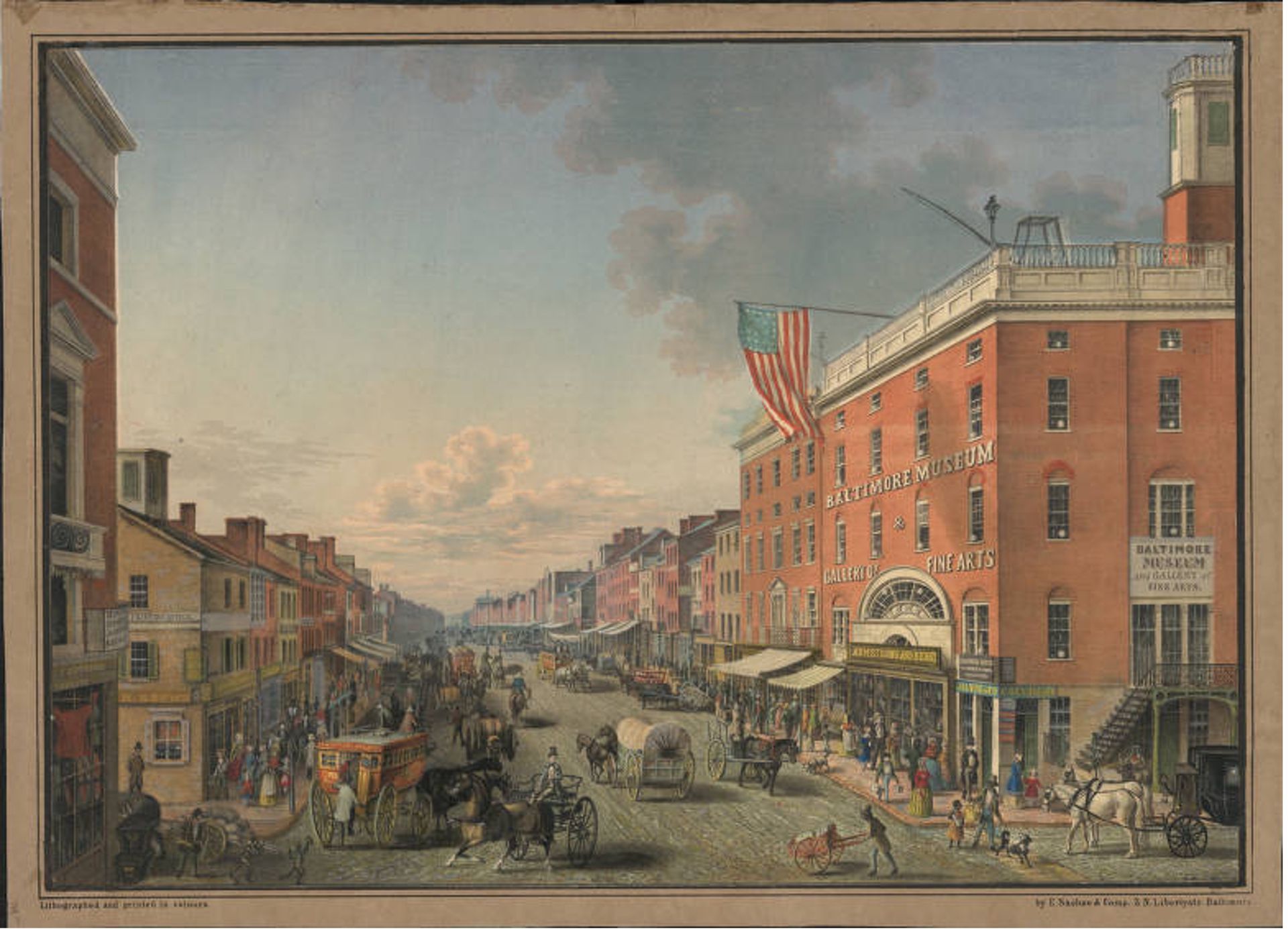
E. Sachse & Co., “Market Street Baltimore, 1850”
Courtesy Digital Maryland, https://collections.digitalmaryland.org/digital/collection/cator/id/70/
An old colored man living near Baltimore who was acquainted with Joseph Smith gave passengers a start at that end of the road by piloting them to another colored man near the Susquehanna. This man would go in the night see them across the river and direct them to the house of Isaac Waters living near Peach Bottom Ferry York county and then return before morning. Waters would then take them to Smith’s. Here they were concealed in the back part of a dark apartment in the barn entirely underground and victuals [food] carried to them while they remained. While Joseph had many pro slavery opponents yet none he believed informed on him at least they gave him no trouble.
Robert Smedley, (History of the Underground Railroad in Chester and the
Neighboring Counties of Pennsylvania (1883), 227-29 and 231).
Black abolitionist agents were extremely active in southeastern Pennsylvania. One of them was Isaac Waters, who rowed people across the Susquehanna River from Peach Bottom (now the site of a nuclear power plant) to the Smith farm.
Famous Black businessmen also worked on the Underground Railroad, including William Whipper and Stephen Smith, https://en.wikipedia.org/wiki/William_Whipper.