Karolyn Smardz Frost, PhD
Karolyn Smardz Frost is the Canadian scholar representing the binational component of the Cataract House Project. She is the only Canadian archaeologist who holds a doctorate in the History of Race and Slavery. Her studies focus on Black transnationalism in the US/Canadian borderlands. A specialist in public and educational archaeology, she has six books in print, and a host of articles, exhibit curatorial contributions, media pieces, films and other publications to her credit, nearly all dealing with exploring the rich heritage of African Americans who became African Canadians in the years before the Civil War.
She is an affiliated scholar at Acadia and Dalhousie Universities in Nova Scotia, and with the University of Buffalo’s Department of Anthropology. In 2012-2013 she was appointed the Bicentennial Visiting Professor for Canadian Studies at Yale University. Karolyn consults widely for government agencies, museums and heritage organizations in both the US and Canada, including the production of the award-winning Freedom City exhibit produced for the Toronto Public Library in 2015. Most recently she and filmmaker Anthony Sherwood produced Finding Freedom on the Sixteen (2023) which is the first film describing the rich Underground Railroad-era heritage of Oakville, Ontario.
It was Karolyn’s 1985 excavation of the first Underground Railroad site dug in Canada that sent her on a 20-year quest to investigate the lives of Kentucky freedom seekers Thornton and Lucie Blackburn. Their biography, I’ve Got a Home in Glory Land: A Lost Tale of the Underground Railroad (New York: Farrar Straus Giroux, 2007), won Canada’s top literary honor, the Governor General’s Award, was nominated for a Pulitzer Prize, and received a host of scholarly awards. Her coedited A Fluid Frontier: Slavery, Resistance and the Underground Railroad in the Detroit River Borderlands (Detroit: Wayne State University Press, 2016) which won the Michigan Book Award supports a UNESCO bid to have the Detroit River declared a World Heritage Site. The chapters, authored by seven American and six Canadian scholars, has just been foundational to the creation of a binational curriculum in Underground Railroad studies taught in schools on both sides of the Detroit River border.
Karolyn also co-edited the seminal volume Ontario's African Canadian Heritage: Collected Writings by Fred Landon, 1918-1967, co-edited with Dr. Fred Armstrong, Dr. Bryan Walls and Hilary Bates Neary (Toronto: Dundurn Press, 2016) and co-authored the only book on Toronto Black history every published, The Underground Railroad: Next Stop, Toronto! (Toronto: Dundurn Press, 2000, 2nd ed 2022). Her most recent biography, Steal Away Home: One Woman's Epic Flight to Freedom - And Her Long Road Back to the South (Toronto: HarperCollins, 2017) remains the only book every published about a freedom seeker who reached Canada by way of the Cataract House hotel. It received the Speakers Award for the Legislative Assembly of Ontario; the J.J. Talman Prize for the best book on Ontario history over the past three years; was a finalist for the Atlantic Book Award; and was nominated for the Heritage Toronto Award. In 2010, Karolyn was one of five finalists for TVO’s “Best Lecturer in Ontario” Award.
Over the past several years, Karolyn has been currently working with noted UGRR historian Judith Wellman, and Douglas R. Perrelli, Director of the Archaeology Lab, University of Buffalo on a combined historical research and archaeological project at the Cataract House site. She is also assisting the US Park Service and Parks Canada in extending the Network to Freedom to include sites in Canada.
Douglas J. Perrelli, Ph. D., RPA
Douglas J. Perrelli, Ph. D., RPA is a Registered Professional Archaeologist with 30 years of experience performing archaeological work in western New York. His interest and activity in New York State archaeology began in 1984 as a student at the State University of New York at Geneseo. Since that time, he has received a master’s degree (1994) and a doctoral degree (2001) from the University at Buffalo (UB), with active participation in exploring and preserving western New York’s archaeological heritage.
Dr. Perrelli has been a member of the Society for American Archaeology since 1993 and of the Register for Professional Archaeologists since 2001. He currently serves as Chair for the New York State Board for Historic Preservation and the Archaeology Committee of the board. Dr. Perrelli has been the Director of the Archaeological Survey, University at Buffalo (UB) since 2001, and has a Clinical Assistant Professor appointment in the Anthropology Department at UB. He brings considerable experience and knowledge about New York state historic and pre-contact archaeology and the workings of numerous boards, councils, societies and committees to the table. His research interests include archaeology of the Underground Railroad, Iroquoian archaeology, the study of stone tools and cultural resource management (CRM), all in the context of historic preservation.
Dr. Perrelli brings his unique expertise to bear in assessing the new data provided by the program of historical research proposed here, in light of existing archaeological findings to identify activity areas where individual African American hotel workers worked, where they lived while employed at the hotel, where they may have concealed freedom seekers in the basements and on the hotel grounds, and where both enslaved “servants” of visiting Southerners and free African American guests may have been housed while resident at the Cataract House.
Judith Wellman, Ph.D.
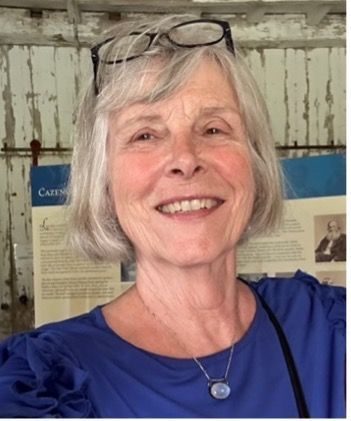
Judith Wellman, Ph.D., is Principal Investigator, Historical New York Research Associates, and Professor Emerita, State University of New York at Oswego. She has more than 40 years of experience in history teaching, research, archival management, museum studies, historic preservation, cultural resource surveys, and grants administration, focusing on nineteenth century U.S. history, women’s history, Underground Railroad history, and African American communities.
With a Ph.D. from the University of Virginia, Judith Wellman taught history at the State University of New York at Oswego from 1972-2010, where she also served as Curator, Special Collections, with a special focus on local history. In 2012, she held the Gretchen Hoadley Burke Chair in Regional Studies at Colgate University.
Dr. Wellman has worked as a consultant and principal investigator on award-winning projects with the National Park Service, National Endowment for the Humanities, the Mary Baker Eddy Library, the National Underground Railroad Freedom Center, the U. S. Department of Education, the Preservation League of New York State, the New York State Council on the Arts, the New York State Office of Historic Preservation, the Humanities New York, the Documentary Heritage Program of the New York State Archives, National Public Radio, Save America’s Treasures, the Weeksville Heritage Center, Niagara Falls Underground Railroad Commission, Higher Ground Inter-cultural and Heritage Association, and many other community groups. She has extensive experience working local organizations and giving talks and workshops for teachers and public audiences.
She is the author of many scholarly articles, more than a dozen community and county-wide cultural resource surveys on the Underground Railroad and women’s rights, more than thirty National Register nominations relating to women’s rights and African American sites, and thirty-four nominations to the National Park Service’s Underground Railroad Network to Freedom (more than half of all those listed in New York State). Books include Brooklyn’s Promised Land: Weeksville, a Free Black Community (New York: New York University Press, 2012); The Road to Seneca Falls: Elizabeth Cady Stanton and the Beginning of the Women's Rights Movement (Urbana. Illinois: University of Illinois Press, 2004); Grassroots Reform in the Burned-over District of Upstate New York: Religion, Abolitionism and Democracy (New York: Garland Press, 2000); Landmarks of Oswego County, Editor (Syracuse: Syracuse University Press, 1988). Winner of the John Ben Snow award.
Bill Bradberry
Need bio