Cataract House Hotel
Cataract House Hotel
From 1825 until 1945, the Cataract House stood near the rapids of the Niagara River just above the Falls. As an “immense pile of stone and mortar,” it ranked “with the best class of hotels.” It offered superb accommodations, entertainment, and excellent food to visitors from all over the country and the world, including “princes, dukes, marquises, counts, and lords” and at least four presidents. “A. Lincoln & family” registered at the Cataract on July 4, 1857, along with guests from Mississippi and Louisiana.
As many as 20 percent of Cataract guests came from southern states. White members of the southern elite often brought their enslaved “servants.” to wait on them while they holidayed at the Cataract House.
The dining room at the Cataract was famous for its excellent cuisine. Professional waiters, all men of African descent, served “viands that delight both the eye and palate” at the Cataract House. A significant number of waiters had been born in the South. Others resided in Canada West (now Ontario), many of them refugees from slavery themselves. In the 1850 US census, as many as 80 percent listed their birthplaces as a southern state or “unknown,” concealing their actual birthplaces. A number of the Cataract’s Black employees used false names, suggesting that they themselves had escaped from slavery.
Waiters played a double role. Under the direction of head waiter John W. Morrison, they carried out their duties in the dining room with military precision. The Cataract House was famous for its “parade of the waiters” in which foods were served in time to musical accompaniment.
Yet, these men were also agents on the Underground Railroad. In rowboats moored at the base of the Falls, they ferried people across the Niagara River to Canada. And when slave-catchers (bounty hunters) tried to capture refugees, waiters physically fought back. Some spectacular freedom seeker escapes are described in the following pages, including the eyewitness account of waiters rushing down the staircase to the base of the Niagara Gorge, still carrying the silver platters of food they had been serving for dinner.
Unveiling of Cataract House marker, August 5, 2021.
Photos

Guests enjoying a picnic across the river from the Cataract House, c. 1860
Courtesy Christopher Densmore
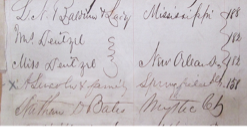
Cataract registration books with signature of A. Lincoln, July 4, 1857.
Courtesy Niagara Falls (N.Y.) Public Library
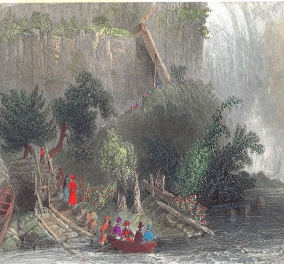
William Bartlett, “The Landing on the American Side (Falls of Niagara).”
in Nathaniel Parker Willis. American Scenery, Vol. I (of 2) (1839), engraving by J.S. Bentley.
Note men of color in the boat and on the stairs.
Library of Congress, Prints and Photographs, reproduction # LC-USZ62-105788; control #
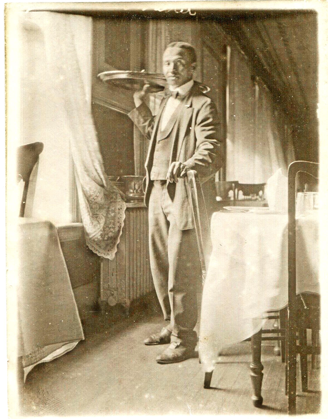
Unknown waiter.
Found by Ally Spongr DeGon.
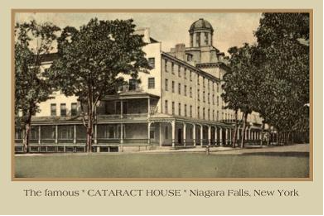
Cataract House, early 20th century, showing façade with 1842, 1845, 1868 construction and west wing, 1853.
Courtesy Niagara Falls (N.Y.) Public Library
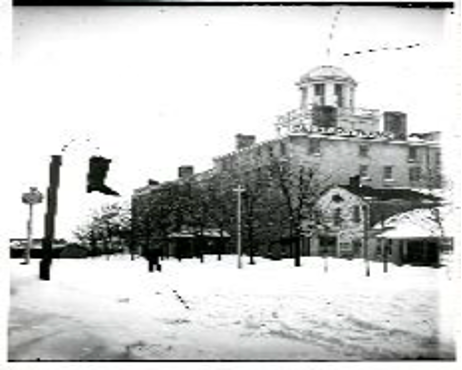
Cataract House after 1845
Courtesy Niagara Falls (N.Y) Public Library
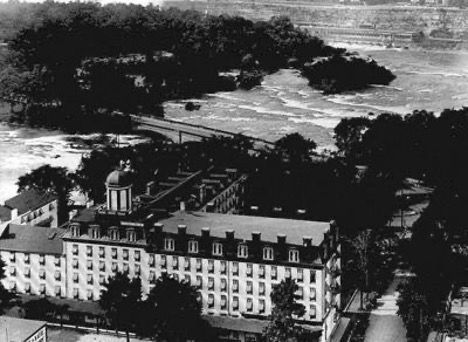
Cataract House, c. 1930 With 1845 addition as it extended toward the Goat Island bridge.
Ann Marie Linnabery, "Niagara Discoveries: Cataract House," Lockport Journal, June 27, 2015
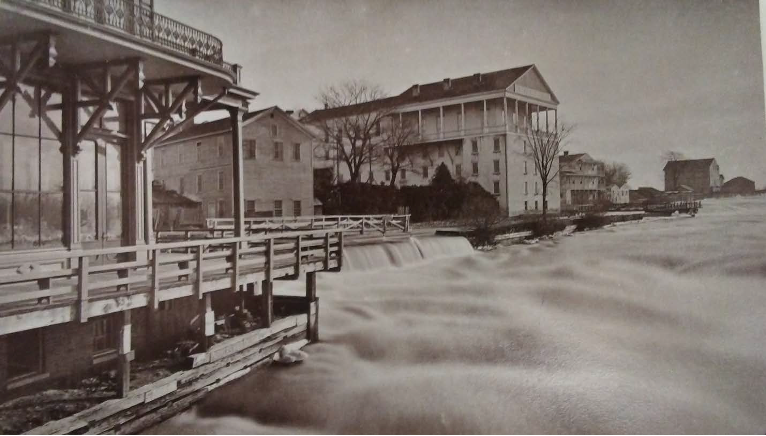
Cataract House, 1879, showing famous “River Parlor,” constructed in 1853 for a ballroom and parlor over the Rapids. Stone building to left of river parlor was the old stone factory attached by a gallery to the 1845 addition and fitted out for sleeping rooms.
James B. Gardner, Report of New York State Survey for the Year 1879
(Albany: Charles Van Benthuysen and Sons, 1880).
Chronology
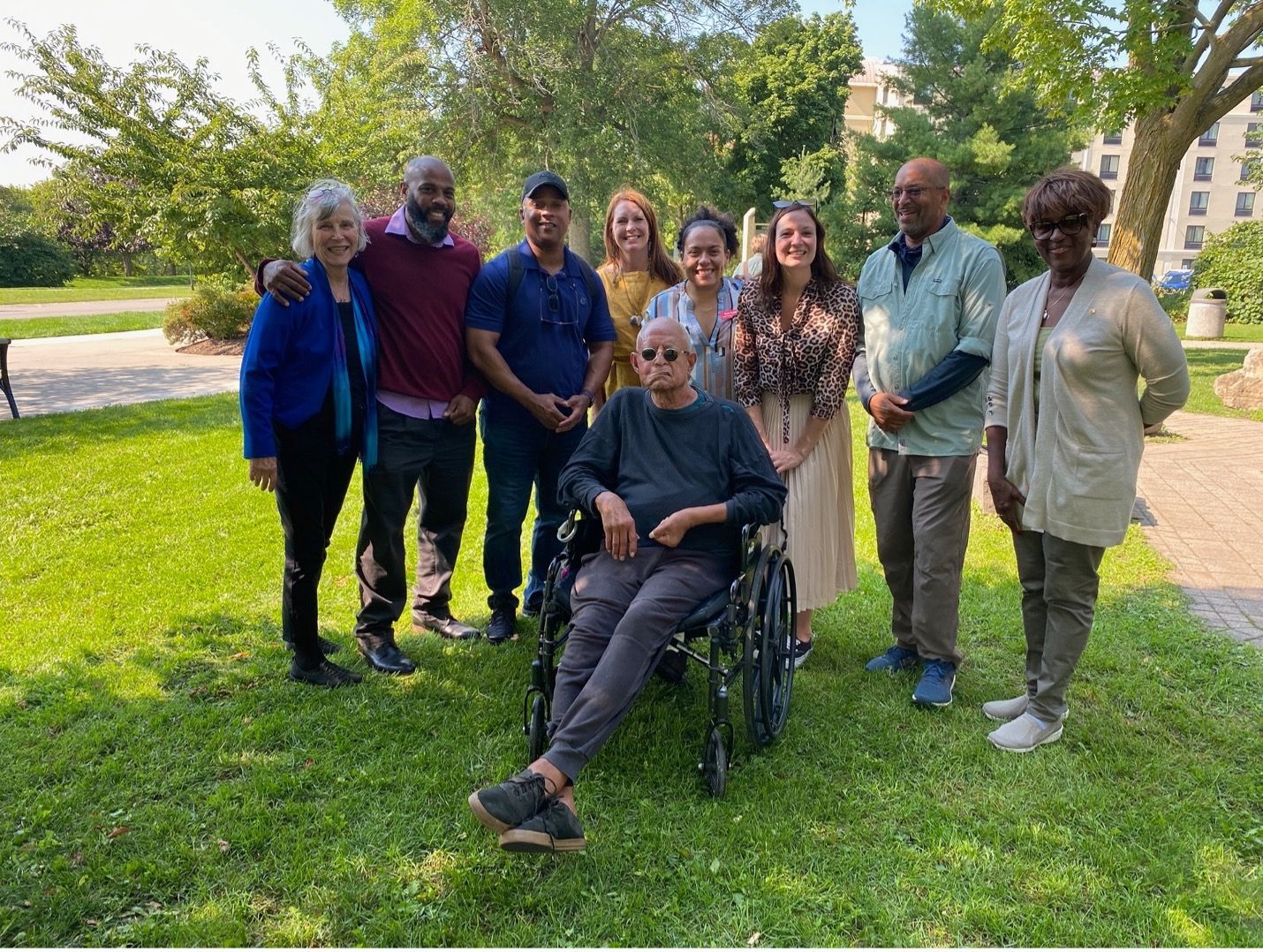
Cataract House Supporters, 2022
First row: William Bradberry
Second row: Judith Wellman, Saladin Allah, Bill’s nephew, Sara Capen, ?, Ally Spongr DeGon, Ken Johnston, ?