John Morrison and Rachel Smith
1859: Manuscripts, Images, Census Records
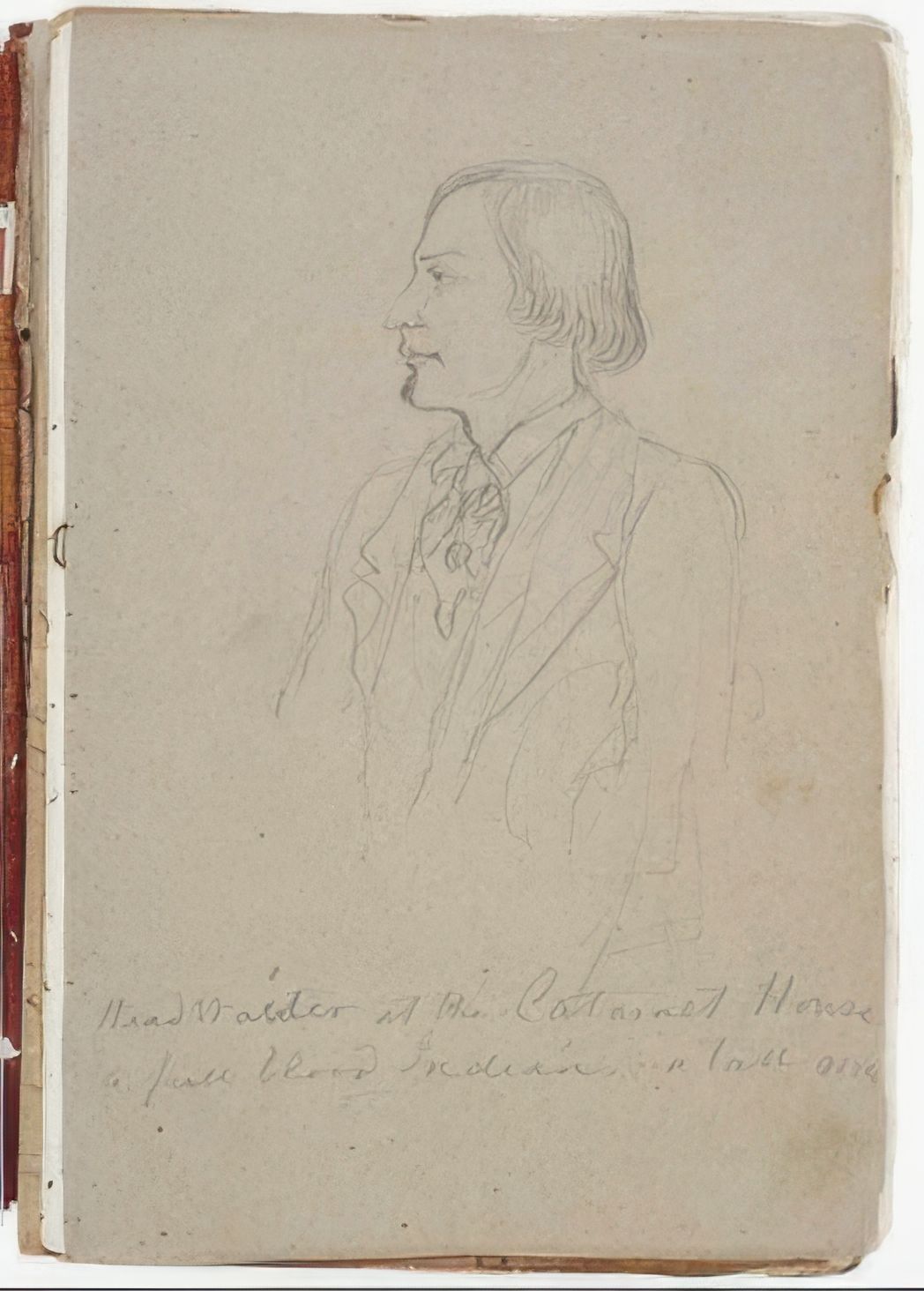
[Mrs. Rufus Howland], "Head Waiter at the Cataract House a Full Blood Indian—a tall man"
“1853 Pencil Sketches, Niagara Falls”
Courtesy Early American Auctions (earlyamerican.com)
Author identified by Ally Spongr DeGon
As a nexus of slavery and freedom, the Cataract House became the focus of many escapes from slavery. The story of John W. Morrison and guest Rachel Smith gives clues about the importance of the Cataract House and how the active station there worked within the larger Underground Railroad network.
John Morrison had likely escaped from slavery himself. By the 1830s, he, his parents and his sister were living in Hamilton, in what is now Ontario. He later bought land a rural part of the province, and his parents moved to Lundy’s Lane on the Canadian side of the Falls. By 1847, he and his wife Flora Piper Morrison were living in Rochester, New York.
Of mixed African, Indigenous, and probably white ancestry, Morrison worked as head waiter at the Cataract House from the 1840s until 1863. Throughout that period, he was actively involved in helping freedom seekers escape from slavery.
On October 11, 1859, Rachel Smith, a white Quaker woman from Lancaster County, Pennsylvania, checked into the Cataract House in Niagara Falls with two friends. What happened next gives us clues about how waiters at the Cataract House came to play such an important role in the national Underground Railroad network.h
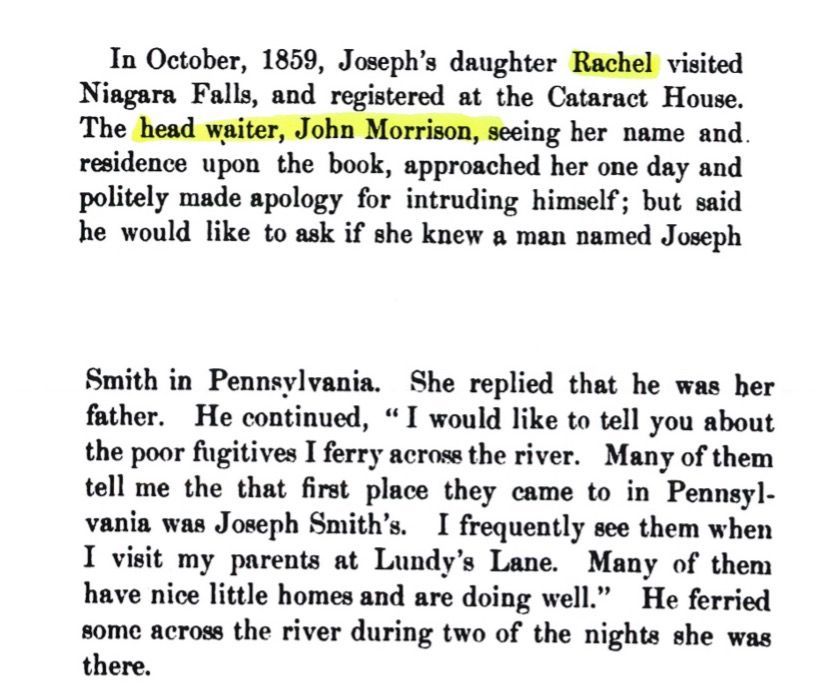
Transcript: In October 1859 Joseph's daughter Rachel visited Niagara Falls and registered at the Cataract House. The head waiter John Morrison seeing her name and residence upon the book approached her one day and politely made apology for intruding himself but said he would like to ask if she knew a man named Joseph Smith in Pennsylvania. She replied that he was her father.
[Morrison] continued, “I would like to tell you about the poor fugitives I ferry across the river. Many of them tell me the that first place they came to in Pennsylvania was Joseph Smith's. I frequently see them when I visit my parents at Lundy's Lane. Many of them have nice little homes and are doing well.” He ferried some across the river during two of the nights she was there.
Robert C. Smedley, History of the Underground Railroad in Chester and the
Neighboring Counties of Pennsylvania (1883), 231-32. https://books.googleusercontent.com/books/content?req=AKW5Qaf_9ZkRG-ttHuCaWax7RO2wOR2emS89QmjmIPK6ocftjEzN-wg86YaCQ7lkUUOtujLsvkYLxmfUTINN2_NR96fIGkQnpLP0VPYmMIIKoxlkigdV9f4YdsuxYw7CoqfyMyNS1RaHdUID-50NeHx1RIED0bkhf42ZKj7FnS9JzVcZYrM4kKflUZiGT_SwoNL10gOb0kxG09aFQuxk_89pqj6H5OGQbAq9dAw4Jw2CuIt0b9wTaNIyVcaK7HojR0z-xwGECxH_l9DVVkJQNvZYJ1nr9d2g9SB4-dEGe6-aqtQOnceScik
Census Records

1850 US Census, Niagara Falls, New York
John Morason [Morrison], age 40, male, Black, Waiter, no birthplace listed



1855 New York State Census, Rochester, N.Y.
Wooden house worth $600, $150 personal property, John Morrison, aged 45, mulatto, married, born in Maryland, lived in Rochester for seven years, waiter
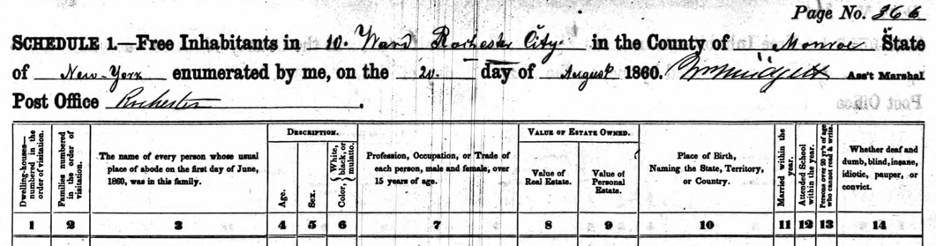
1860 Census U.S. Census, Rochester, New York
John Morrison, age 45, male, mulatto, hotel waiter, owns house worth $600, personal property worth $100, born South America (probably meaning the American South rather than the continent of South America).
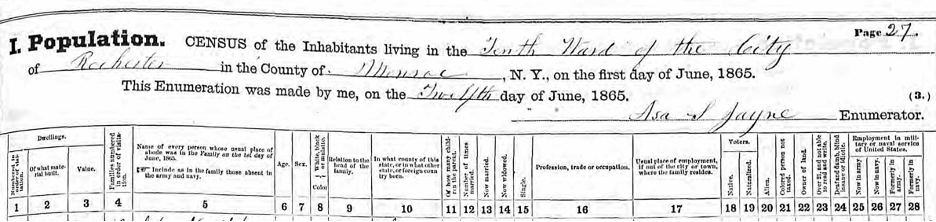
1865 New York State Census, Rochester, New York
John W. Morrison, age 45, male, mulatto, ½ Cherokee, born Illinois, married once, now married, waiter, usual place of employment Niagara Falls, native born voter, owner of land.
Document #1:
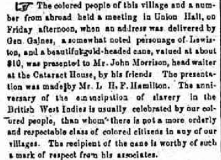
John Morrison was well-respected by both Black and white communities in Niagara Falls. In 1856, for example, “colored people of this village and a number from abroad” celebrated Emancipation Day. This was the anniversary of the Slavery Abolition Law that freed most of the slaves in the British Empire on August 1, 1834. It was celebrated on both sides of the US-Canadian border up to the time of the Civil War. Those celebrating held a meeting in Union Hall, at the corner of Falls and Mechanic Streets, with a speech by General Gaines, a well-known African American from Lewiston. L.H.F. Hamilton, a Black business owner in Niagara Falls, presented a gold-topped cane to John W. Morrison, head waiter at the Cataract House. “The recipient of the cane is worthy of such a mark of respect from his associates,” noted the Niagara Falls Gazette.
Niagara Falls Gazette, August 5, 1856.
Document #2:
Cataract House Register October 11, 1859.
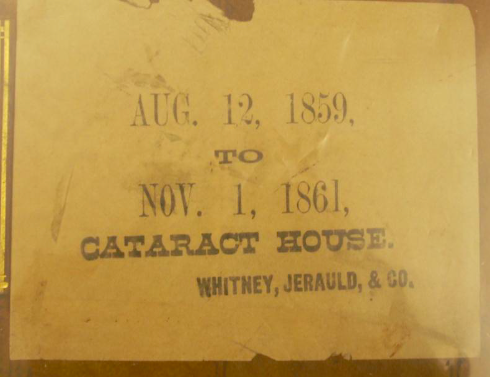
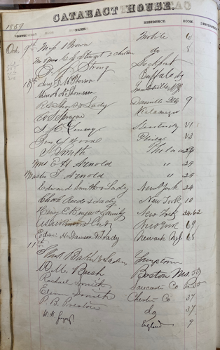
Rachel Smith’s signature in the Cataract Hotel Register, October 11, 1859. Courtesy Niagara County Public Library